Sunday, April 29, 2007

Observatory Shootout

SkyShed POD vs. Thinking Outside SmartShed


Last spring when I decided I was finally going to go ahead with building an observatory, a Canadian company called SkyShed announced their plans to produce an inexpensive plastic observing dome, the SkyShed POD (Personal Observatory Dome) and called for beta testers. I immediately replied, but like about a thousand other people, wasn't selected.


Since I wasn't selected to test, I went with Plan B and purchased a SmartShed Deluxe by Thinking Outside at my local Sam's Club. I did a lot of research online about converting a storage building to a backyard observatory, and the SmartShed kept showing up. But I always had a nagging question: Did I make the right choice?


It turns out fellow Dam Astronomer Andy Raiford did make the cut to test the POD, and it recently arrived in his back yard. I went for a visit and made some notes comparing his POD to my SmartShed.

First Look


There's no denying it: the POD is cool-looking. You know when you see it that you're looking at an observatory. SkyShed got the proportions right and built a handsome building.

My SmartShed? Well, it's not unattractive--I think it looks a whole lot nicer than most storage buildings--but it doesn't look like an observatory. But is that a bad thing? The POD just screams, "Hey! There's a telescope in here!" while the Smart Shed doesn't say anything at all. Call is security through obscurity, but I don't mind not drawing attention in my suburban back yard. Let's call the outside looks a draw.

Seeing the Sky


SkyShed made an interesting decision building their dome. Rather than follow the traditional design of a slit along one side of the dome, they chose a clamshell design. The dome is split down the middle and pivots open at the base, opening up the whole hemisphere. It's cleverly done, and eliminates some dome drawbacks. There's no need to rotate the dome during an imaging or observing session to keep a slit aligned with the telescope. You can also stand in the building and see a big chunk of sky instead of just a sliver. The downside to a clamshell design is that unless you offset your telescope from the center of the dome, you can't point it straight up at the zenith. There's a lot of online debate going on about this: Some see it as a major drawback, as the zenith is the best place to observe in the sky as you're looking through the least amount of atmosphere. Others feel that the obscured portion of sky is too small to be of consequence, and that you can't image at the zenith with a German equatorial mount (GEM) anyway due to a situation called "meridian flip."


The SmartShed roof opens differently. It's also in two pieces, but rather than pivoting on a hinge, one half is lifted up and slides over the over. The building wasn't designed to have an open roof, but it's a happy feature with the way Thinking Outside put it together that it works without modification. The open roof does interfere with part of the sky though--I lose views to the north below about 25° elevation. East, South and West can be accommodated to the horizon by opening a door, but in my back yard the sky is obscured by houses before the walls become an issue.


After looking at both setups side-by-side, I think I prefer the SmartShed's opening. It does take a little more effort to unscrew four connectors and slide the roof off, and realigning everything at the end of the night and putting it all back together takes more time than simply swinging the dome closed, but I like the big view of the sky. I also don't have to think about offsets or turning the dome to any particular direction.

Controlling the Elements


I see having a backyard observatory as serving two purposes. It allows you to permanently mount a telescope so that it's available any time the sky's clear. You can simply open the roof and begin observing. The other reason is to control the elements--wind, cold and light. WInd and cold are related (duh), but even on warmer nights wind can present a challenge to observing or photography as it tries to push your telescope around. And while an observatory can't do anything about skyglow from urban lighting, it can shield you from the neighbor who insists on leaving his back porch light on all night.

I'll admit up front I haven't spent a night observing in a POD, but I have a pretty good imagination. I don't see the clamshell offering a whole lot of protection from the wind. The way I see it, unless the wind is coming directly from behind the open dome, the open half is going to act like a funnel and capture every breeze. As for the neighbor's porch light, the relatively low walls won't block much light from your eyes. This is where a traditional dome would have an advantage with its smaller opening.

The SmartShed has remarkably good protection from the elements despite the open roof. The high walls do a good job of deflecting most of the wind, and completely block all outside light when I'm sitting down. I find I can get as dark adapted as the skyglow will allow, and there is no white light showing in any direction. I think I can stay warmer inside too, by staying under the covered section.

Interior Features


There's no contest here. The SkyShed POD is a seven-foot diameter circle with about 38 and a half square feet of floor space. The SmartShed is a seven-by-eleven foot rectangle with 77 square feet of floor--more than double the POD's. The rectangular elevation of the SmartShed means more headroom, too. The POD can be equipped with bays to increase the covered storage, but unless you crawl, you can't actually get in them. Even with a table and an observing chair there is still plenty of room for two adults inside the SmartShed. The SmartShed also comes standard with built-in adjustable shelving.


A second major interior difference is the floor. The POD is intended as a portable building, and does not include a floor, unlike the SmartShed's full floor. No floor is an advantage for using a tripod, but I like having my pier coming up through a hole in the floor. I just don't see the need for a portable observatory, and you'll need a full-size pickup or a trailer to move the POD, so I'd rather have a floor. I don't know how weather-tight the POD is, but I can say that my SmartShed has never leaked, even during some pretty intense thunderstorms. I wouldn't want to leave anything on the ground inside the POD. I imagine there's going to be a lot of seven-by-seven decks built below PODs. The POD and the SmartShed are built from similar materials and can be assembled in roughly the same amount of time.


The Bottom Line


Regular price for a SkyShed PODis $1,495, with shipping to my door in Texas an additional $664. Shipping to other states varies from $365 to more than $900 to the Florida Keys.

A Thinking Outside SmartShed Deluxe is $795 at Sam's Club. I picked mine up at my local store, so there was no shipping costs. The Sam's web site estimates $267 shipping to my ZIP code. The only modification required for using the building as an observatory was cutting a 12-inch hole in the floor with a jigsaw for the concrete pier to protrude through.

I don't have that nagging question any more. The POD is cool, no doubt, and SkyShed should sell a lot of them. But in my opinion, the Thinking Outside SmartShed Deluxe is more useful and a better value.

Be sure to read the comments for Andy's rebuttal. He has more experience with the POD, and I appreciate his feedback, particularly concerning the floor and wind.

Thursday, April 26, 2007

M104, The Sombrero Galaxy


Nothing wrong with this one that better focus, autoguiding, and about a 4-times longer exposure wouldn't cure. Oh, and shooting when it's not a quarter moon would probably help, too.

Info from Starry Night Pro:
Distance from observer: 50.000 Mly
Apparent magnitude: 9.50
Angular size: 12 arcminutes
Description: M104 is a nearly edge-on spiral galaxy with an unusually large central bulge. It is an outlying member of the Virgo Cluster. This galaxy is known as the Sombrero Galaxy due to its large circular glow and the dark lane which bisects the galaxy into two unequal halves. A small telescope can show the galaxy’s bright bulge with pointed ends and the dark lane. M104 was not in Messier’s published catalog, but was added in 1921 when it was noticed that Messier’s notes indicated that he knew of this object. Objects M105-110 were subsequently added for the same reason.

10" LX200 @ f/6.3, 30 x 120 sec, EOS 350 D @ 1600 ISO

Monday, April 16, 2007

M65 & M66, Galaxies in Leo (Reprocessed)

While testing my guiding setup, I wound up shooting 3 series of this over two nights. I wondered what I would get if I tried combining them.


Finally, some color is coming out! My plan for the next good night is to try for 3 hours worth of exposure and see what I get.

This is kinda vignetted--I didn't shoot flats since I was only worried about guiding. Next time.

10" LX200 @ f/6.3, 60 x 90 sec, EOS 350 D @ 1600 ISO

Sunday, April 15, 2007

M64, The Black Eye Galaxy


30 x 120 seconds, unguided.

Oddly enough, I get better tracking without guiding. The inexpensive mount I'm using to connect the guide scope to the LX200 has too much flex. Well, all it takes is money. (I'll be seeing how far I can go unguided for a while, I think!)

Thursday, April 12, 2007

M65 & M66, Galaxies in Leo

Spring is here, so it's galaxy season! Here's 2 of the Leo Triplet, M65 & M66 (that's M66 on the left).


Info from SEDS.org:

M65, together with its neighbors M66 and NGC 3628, forms a most conspicuous triplet of galaxies, the Leo Triplett or M66 group, located at a distance of about 35 million light years.

Although it is close to and thus under the gravitational influence of its neighbors, M65 looks like a very "normal" Sa type spiral and seems to have felt little influence. It has a prominent central lense and tightly wound spiral arms, plus a prominent dust lane marking the facing edge. The luminous disk is dominated by a smooth old stellar population. Near the lane, some knots are visible, which, according to J.D. Wray, may be associated with star forming regions. The lane may hide regions of star formation usually associated with such features in spiral galaxies

M66 is considerably larger than its neighbor, M65, and has a well developed but not well defined central bulge, and is therefore classified Sb. Obviously its spiral arms are deformed, probably because of the encounters with its neighbors. They seem to be distorted and displaced above the plane of the galaxy. Note how one of the spiral arms seems to pass over the left side of the central bulge. Much dust is visible here, as well as a few pink nebulae, signs of star formation, near the end of one of the arms.


Canon EOS 350D, 10" LX200 @ f/6.3, 20 x 90 seconds, ISO 1600

Wednesday, April 04, 2007

Saturday, March 31, 2007

Lone Star Rod & Kustom Roundup


First clear day in two weeks! Embarrassing moment: seeing a fellow who looked like Jimmie Vaughn and wondering aloud, “When does the Jimmie Vaughn look-alike contest start?” Guess who the guy was.

Lots more pictures here.

Tuesday, March 27, 2007

Bike Messengers Are on Crack

Explain to me again why I want my child to learn how to ride his bike?

Sunday, March 25, 2007

Honeycomb Sucks, Yeah, Yeah, Yeah


Trudes recently bought a box of one of my favorite childhood cereals, Honeycomb. But inside the box were some weird cardboard-like nuggets instead of the sweet honeycombs I knew so well. What happened? We turned to the font of all knowledge:
Recently, "Bran Blend", defined as whole grain corn flour and corn bran, has been added to the ingredient list. This addition has also coincided with a near-tripling of the fiber content shown on the nutrition label (from originally about 1g to 3g per serving) and the inclusion of Honeycomb cereal in Kraft's Sensible Solution program.

Aficionados of Honeycomb cereal were able to immediately taste the difference. Post has registered many calls of complaints from Honeycomb fans since the change. It remains to be seen whether this new form of the time-tested cereal will continue to sell well with the cereal eating public.

I fired off a note to Post & Kraft Foods:

The "new" Honeycomb, quite frankly, sucks. If I wanted a high-fiber, "healthy" breakfast cereal, I'd have a bowl of Twigs-N-Berries™. If I wanted a sweet, nostalgic bowl of cereal of dubious nutritional value, I'd have a bowl of Honeycomb. Not any more--you've lost a customer.

Friday, March 23, 2007

Abusive Astronomy

Found this here.

Dream Cars

I don't know what's going on, but on the way back from lunch today I passed a whole nest of Cobras, and my dream car, a beautiful powder-blue-and-orange Ford GT40. Nearly ran off the road, I did.


Monday, March 19, 2007

Messier Half-Marathon

A little background from Wikipedia:

The Messier objects are a set of astronomical objects catalogued by Charles Messier in his catalogue of Nebulae and Star Clusters first published in 1774. The original motivation behind the catalogue was that Messier was a comet hunter, and was frustrated by objects which resembled but were not comets. He therefore compiled a list of these objects.

The first edition covered 45 objects numbered M1 to M45. The total list consists of 110 objects, ranging from M1 to M110. The final catalogue was published in 1781 and printed in the Connaissance des Temps in 1784. Many of these objects are still known by their Messier number.

Because Messier lived and did his astronomical work in France in the Northern Hemisphere, the list he compiled contains only objects from the north celestial pole to a celestial latitude of about –35°. Many impressive Southern objects, such as the Large and Small Magellanic Clouds are excluded from the list. Because all of the Messier objects are visible with binoculars or small telescopes (under favorable conditions), they are popular viewing objects for amateur astronomers. In early spring, astronomers sometimes gather for "Messier marathons", when all of the objects can be viewed over a single night.


Well, that's just what I attempted Saturday night from Canyon of the Eagles. Trouble was that the weather--which started out great--turned to mush and the completely overcast by about 1:00 a.m. As a result I only made it through the first 45. Still, I saw a lot of things I hadn't seen before and want to go back and photograph.

Trudy & Ian came along for the first time. The boy had a pretty good time running around. He & Trudy wound up watching movies on the iBook in the tent after it got dark, but he did come look through the scope a couple of times.

Object Name Start Time Notes
M74 8:39:11 PM very faint
M77 8:43:15 PM ok
M33 8:53:56 PM large faint patch
M31 8:59:57 PM not bad for low in sky
M110 9:00:09 PM averted vision
M32 9:00:34 PM compact
M52 9:02:22 PM nice, easy
M103 9:13:01 PM pretty!
M34 9:16:19 PM big
M45 9:23:53 PM hello ladies! Better in ED80. Some nebulosity visible
M79 9:28:02 PM medium dim
M42 9:28:50 PM great in ED80; a,b,c,d,e & f easy with 13mm Nagler in 10"
M43 9:34:00 PM yup
M78 9:34:27 PM dull
M1 9:44:11 PM 3D-like, maybe texture with ultrablock?
M35 9:49:56 PM too big for 10"
M37 10:22:24 PM nice
M36 10:24:33 PM meh
M38 10:26:40 PM ok
M41 10:28:55 PM yup
M93 10:29:32 PM ok
M46 10:38:39 PM cool w/neb in cluster
M50 10:39:33 PM ok
M48 10:40:32 PM ok
M47 10:40:49 PM ok
M44 10:51:41 PM bah
M95 10:55:40 PM nice
M96 10:56:04 PM nice
M105 11:05:58 PM nice
M81 11:24:33 PM love 81 & 82
M82 11:25:23 PM love 81 & 82
M97 11:31:14 PM dim
M108 11:34:51 PM slim
M109 11:47:35 PM texture w/ averted vision
M40 11:50:37 PM why is this even on the list?
M106 11:55:14 PM definite shape
M94 12:07:50 AM hints of spiral?
M51 12:19:07 AM not bad. definite spiral, no bridge
M53 12:30:36 AM ok
M3 12:36:36 AM nice. tight center, loose edges
M85 12:37:43 AM hazy w/ bright center, like picture
M98 12:41:44 AM unremarkable
M99 12:45:53 AM something w/averted vision
M100 12:48:53 AM faint, no detail (pity)
M86 1:01:39 AM 84 & 86 together ok
M84 1:01:39 AM 84 & 86 together ok

Friday, March 16, 2007

Best Saturn of the Year


I think this is my best one this year. CSC said 4/5 seeing; that seemed about right.
10" LX200 w/ TeleVue 2.5x Powermate, Philips SPC900NC webcam with UV/IR filter, 975/1200 frames stacked in Registax.

Tuesday, March 13, 2007

Pondering

I've had this question stuck in my head for a while now, and it's starting to bug me: If the Brady Bunch and the Partridge Family had a fight, who would win?


Thursday, March 08, 2007

NGC 2903, A Galaxy in Leo


I'm both pleased and disappointed with this shot of NGC 2903. I'm happy with the color and the structure of the galaxy, but I'm unhappy with the noise. The noise and the elongated stars are related--I stayed with just 60 sec. exposures because my tracking seems to be getting worse instead of better.

I guess it's time to train & retrain the PEC on the LX200. I also wonder if I'm asking too much from my equipment. I'm using the cheap rail with outriggers from ScopeStuff, so I'm sure I'm getting some flex there. I'm also not convinced that guiding with a 400mm fl guidescope + 2x barlow is working with the 2500 mm fl LX200, even with the f/6.3 reducer.

Wednesday, March 07, 2007

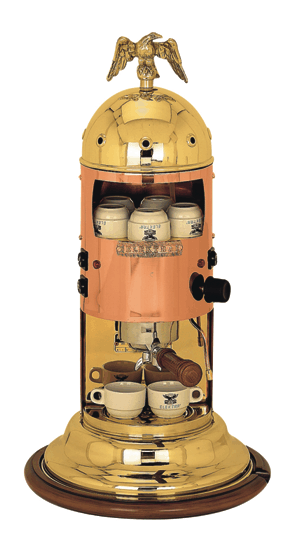
If I Drank Coffee …

… and had an extra $1,800 laying around, I'd own one of these:

Sunday, March 04, 2007

Saturn In Above-Average Seeing


What a difference the atmosphere makes.

Saturday, March 03, 2007

Lunar Eclipse


The Moon was well on its way out of the Earth's shadow by the time it was rising over Mansfield Dam in Austin, Texas. Shot with the Digital Rebel XT through Barry's Orion 80ED.

Friday, March 02, 2007

Work

I'm having to recreate a bunch of sales sheets in Word and Excel, and all I can say is how the hell did Microsoft become the dominant software company on the planet? Just changing the borders around a group of Excel cells takes a dozen clicks. Edit the embedded Excel sheet inside Word, and when you return to Word it's been shrunk down. And Merge Cells? Right there under alignment and spacing, duh.

Sheesh, how do you people deal with this steaming pile every day?

Monday, February 26, 2007

M95 & M96, Galaxies in Leo

I'm not going to win any awards for my deep space photography any time soon, but I'm happy to see anything at all.


Info from Starry Night Pro:
M95 and M96 are a fine pair of galaxies in Leo separated by a mere 42' and can be seen together in the same field with binoculars and telescopes under low magnification. Both are spiral galaxies with M96 being the brighter of the two. M95 has a bright core surrounded by a granular halo. In dark skies M95 might reveal hints of spiral structure and a bar extending from its centre region. Also nearby is the elliptical galaxy M105. Together, M95, M96 and M105 form the Leo Galaxy Group. The Hubble Space Telescope recently measured the distance to M95 using Cepheid variable stars, and used this distance measurement as one of the pieces of data in a new measurement of the age of the universe. The results of this study indicate that the universe is about 14 billion years old.

Another SketchUp Model

Here's my 10" LX200 model. The fork mount is in progress, but it's much more complex than the tube. The wedge will be last, but it should be a lot of fun to figure out.

Sunday, February 25, 2007

Saturn In Average Seeing

Alpine Valley, In the Middle of the Night

This came out better than I thought it would, as the Moon was jumping all over the place last night.

My Best Moon Shot Yet

This is a composite of 10 shots with the SPC900NC in the LX200 through the 3.3 focal reducer. Each of the 10 shots was 250 frames, and anywhere from 6 to 12 alignment points in Registax. All of that to say this is probably my best moon shot yet.


Be sure to click for the full-size version (328 kb).

Thursday, February 22, 2007

A Not Very Good Saturn

It's a cruel irony that the best time to image planets is when they're as close to overhead as possible, so that mean imaging in the winter. But winter is the time when seeing is typically lousy. Those twinkling stars that look so nice in the winter sky? That's my nemesis lately.

Anyway, here's last night's effort with the SPC900NC:

Your Tax Dollars At Work

This pisses me off:


From this page at Jet Propulsion Laboratory.

Wednesday, February 21, 2007

I'm a Mac

Found on the web:

Tuesday, February 20, 2007

ETX-90 Model


I'm staying up way too late playing with SketchUp. Here's a model of my ETX-90 telescope.

Monday, February 19, 2007

Venus and the New Moon

Or, the One That Sounds Like a 70s Pop Duo.

Thursday, February 15, 2007

Split Ring


A fun model for SketchUp of a split ring telescope mount. I actually have pieces of this in my garage; maybe someday it'll be a telescope.

Tuesday, February 13, 2007

M81 & M82, Bode's Galaxy & Cigar Galaxy


Description from Starry Night Pro:
M81 and M82 are perhaps the most famous pair of galaxies in the sky and both can be seen in the same low magnification field of view. Both are spiral galaxies but M81 is nearly face on, while M82 is edge on. The contrast offered by these two galaxies is one of the visual delights of the night sky. M81 and M82 are separated by only 150 000 light years. Tens of millions of years ago, the larger (and ten times as massive) M81 passed close by its smaller neighbour, inducing a round of starburst formation in M82. It also led to the birth of over 100 globular clusters, and disrupted the appearance of M82, so much that it is sometimes classed as an irregular galaxy instead of a spiral galaxy. While quite faint in visible light, M82 is the brightest galaxy in the sky in the infrared region.


30 x 30 sec unguided with the Rebel XT @ ISO 800 through the ST80, riding piggyback on the LX200. Processed with Nebulosity. It's pretty noisy--I could have used many more exposures.

Friday, February 02, 2007

The Moon Visits Saturn

The Moon and Saturn are 2° 43' apart in this picture, or about five times the width of the full moon. Shot this with my new (used) Canon 55-200 mm zoom that I traded an eyepiece for.


Here's a 400% enlargement of Saturn. If you squint, it kinda looks like the planet!


The clouds actually did me a favor. By catching the moon behind the cloud while Saturn was in the sucker hole, I was able to come close to getting a decent exposure on both.

Tuesday, January 30, 2007

Return to the Moon

I went back and reprocessed some Moon shots from October with nice results. Here's a two-night series of Gassendi. Interesting how the changing angle of sunlight makes the features look different.


Then there's this shot of Aristarchus. I knew I'd eventually get it processed better. I may have pushed it too far though.


Last up is a shot of Schiller that I hadn't processed. More info on Schiller is at the Lunar Picture of the Day.

Longhorn Shuffle

Apple introduces iPod Shuffle in colors.

OK, so now that you can get an orange (sort of) iPod Shuffle, you know someone is going to do this.

Monday, January 29, 2007

Another Look at the Moon

First up is an area near the center of the Moon (well, not the center, but the middle of the part we can see) called Sinus Medii, Central Bay. The three "rivers" caught my eye, Rimas Triesnecker, Hyginus and Ariadaeus. The Full Moon Atlas has more info.


Next is what I call Tranquility Base National Park. I spent a couple of nights at the eyepiece looking for Craters Armstrong, Collins and Aldrin before I spotted them; you can see here how small they are. This area is just to the southeast of the shot above. Again, the Full Moon Atlas has more.


Both shot with my new Philips SPC900NC webcam. Sinus Medii processed in Registax, Tranquility Base processed in Keith's Image Stacker. 10" LX200, 2.5x PowerMate.

Saturday, January 27, 2007

Saturn's Back, Part II


Registax rocks. I despise Winders, but I'll admit it when a Winders app works better than a Mac one.

Friday, January 26, 2007

Saturn's Back


Armed with a new Philips SPC900NC webcam, I'm going to get a great shot this year if I can stay up late enough. We had a rare clear night last night with pretty decent seeing.

Thursday, January 25, 2007

Is Gladys For Real?

The Austin American-Statesman tries to get to the bottom of the Gladys phenomenon:

Is Gladys Hardy real? The mystery surrounding this phantom funny woman continues to grow.

Gladys, in case you missed it, is the alleged 88-year-old Austin woman who phoned "The Ellen DeGeneres Show" last week and brought the host to her knees with a barrage of hilarious, homespun comments. more...

Tuesday, January 23, 2007

Gladys Hardy on The Ellen DeGeneres Show

"I'll be honest with you; I love Jesus, but I drink a little."

Monday, January 22, 2007

Joke

Why does Oklahoma have "Oklahoma is OK!" on their license plates?

Because they can't spell "mediocre."

Saturday, January 20, 2007

Entry Monitor System Panel


Still needs the graph for the reentry corridor G vs. velocity, but otherwise done. I had a hard time finding anything other than drawings, so I used the scene in Apollo 13 where Kevin Bacon's character fails the reentry simulation--there's a closeup on this panel in the film.

Friday, January 19, 2007

Currently Reading

Apollo 8 Flight Journal

December 1968, Apollo 8 is in lunar orbit. From the onboard voice recorder:

085:38:00 Anders (onboard): Where abouts are we?

085:38:02 Borman (onboard): Somewhere over the Moon.

I Need A New Hobby

As we enter week 3 of the Great Winter Cloud-Out of 2007, I'm pondering a new hobby that doesn't require clear skies. This looks like a good one.

Thursday, January 18, 2007

FDAI

I've been working on illustrating the Apollo Command Module instrument panel in my spare time, and finished up the FDAI (aka 8-ball).

The drawing's not perfect--I left some detail out of the markings on the ball itself--but I'm pretty happy with the end result.

Wednesday, January 17, 2007

Ice Age, Day 3

The day care reopened today, and Trudy went in to work, so I'm at home updating my blog doing the work I didn't do yesterday.


Monday, January 15, 2007

Deep Freeze

It's not as cold as some parts of the country, but for Austin, it's enough to be classified as "frickin' freezing." We are expecting a thick layer of ice on everything overnight, which should make things interesting tomorrow.

Geostationary Banana Over Texas

Geostationary Banana Over Texas

I looked this over carefully, and it seems to me they are forgetting one critical thing: giant space chimpanzees.

Tuesday, January 09, 2007

Lust


Apple introduces the iPhone.

Brain Fart

I'm still feeling stupid about this. It's New Year's Eve and Keith & I are shooting mortar shells in the front pasture. We come across one with a bad fuse. Sucker will not light no matter what. We try several times, but no joy. I even pull the fuse out and try lighting the other end, just to see what happens. We finally toss the shell.

So the next day, it finally hits me. Why didn't I take a second shell, cut the fuse in half, and stick it into the otherwise good first shell? D'oh!

Friday, January 05, 2007

M45, The Pleiades

Also called the Seven Sisters, even though you can only see six naked eye. Shot this with the ST80, and failed to get it well-centered in the frame, so it has some pretty bad coma in the upper right corner. I processed out most of the purple halos. There's a little bit of blue nebulosity, but it's mostly washed out by the nearly full moon.

5 x 120 sec Canon Digital Rebel XT in the ST80 @ f/5, guided through the LX200.